Log yard inventory vs. mill throughput: reading a timber supplier's stockpile
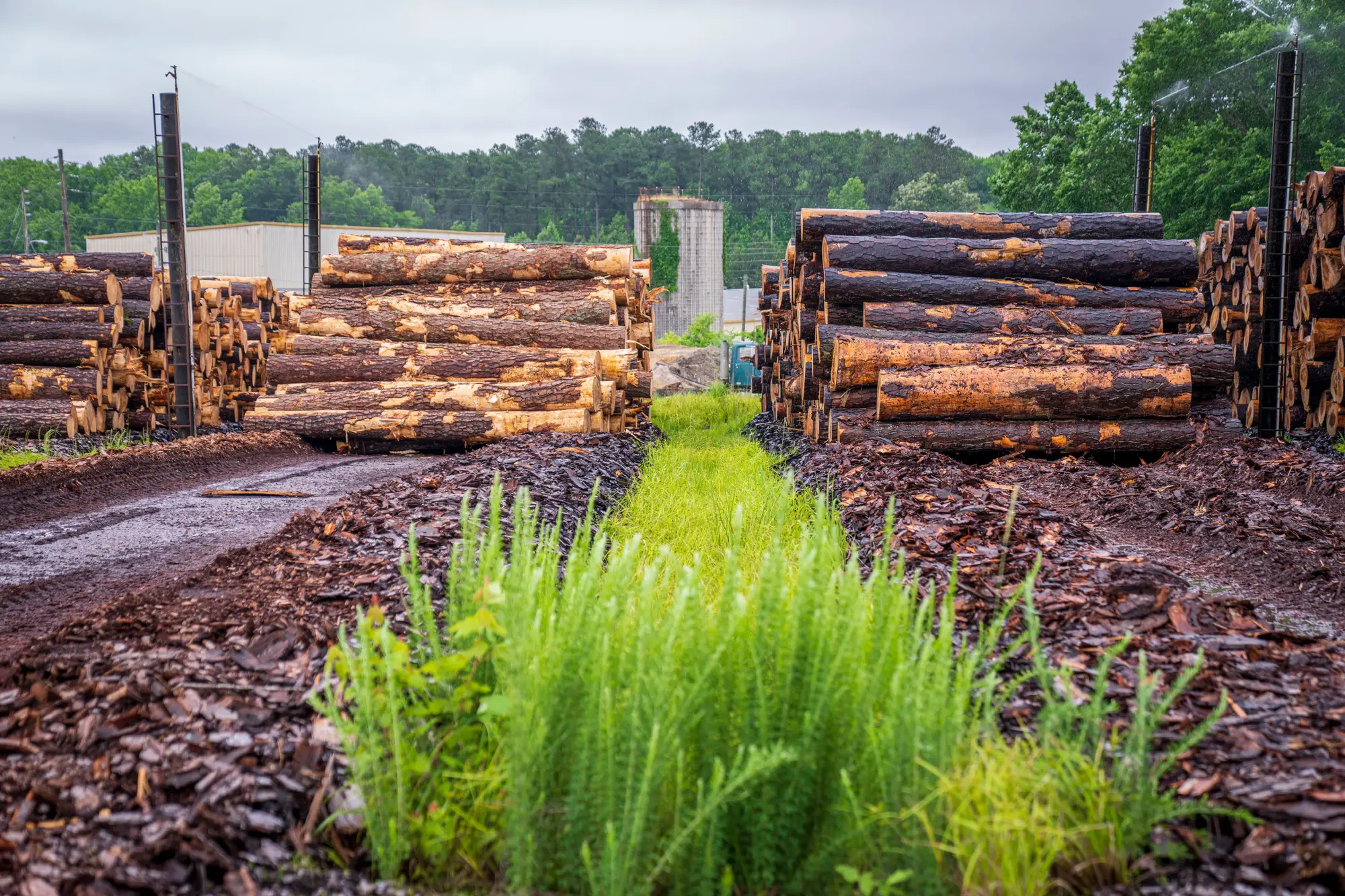
A log yard can look full on a Tuesday and be three days from a curtailment by Friday. That's the gap procurement buyers keep tripping over: the pile you can see from the road and the cut rate happening inside the mill are two different numbers, and only one of them is visible without a phone call.
Why log deck inventory and mill throughput tell different stories
A log deck is a snapshot. Mill throughput is a rate. A yard holding forty days of supply at a 200 MBF/day cut rate is in a very different spot than the same forty days at 350 MBF/day, and the deck photo alone doesn't tell you which one you're looking at. Mills also draw unevenly, pulling heavier on certain species or diameter classes depending on what's running through the headrig that week, so a deck can look steady in total volume while the piece the mill needs most is thinning out underneath.
That's why "the yard looks fine" is a weak signal on its own. The deck has to be read against a rate, and the rate is usually the thing the supplier controls the telling of.
Reading the pile: what a shrinking log deck signals
A few patterns matter more than the raw volume on any given day:
- Steady week-over-week decline with no corresponding truck activity. That's a mill pulling down stock faster than it's restocking, which is the first real tell of a woods-supply problem, whether that's logger availability, weather shutting down haul roads, or a stumpage dispute nobody's announced yet.
- A sudden flat line after a period of steady decline. Sometimes that means supply caught up. Sometimes it means the mill throttled back production to match what's left, which is its own kind of bad news for anyone counting on that mill's output.
- Piles that grow but skew toward one species or grade. Total cords up doesn't help if the grade the mill runs hardest is the one going down.
None of this requires inside knowledge of the mill's operations. It requires watching the deck itself, repeatedly, and comparing this week to last week rather than trusting a single look.
When the supplier's numbers and the yard don't match
Most timber suppliers report inventory on their own schedule, which means on their own terms. A mill running short doesn't call procurement the day the deck gets thin. It calls when the shortage is already affecting delivery, by which point a buyer has lost the lead time to requalify another supplier or adjust a purchase schedule. Sawmill feedstock supply is one of those categories where the first official word of a problem is often the last useful moment to act on it.
The gap between what a supplier says and what the yard actually holds isn't usually dishonesty. It's lag, selective reporting, and the fact that nobody's job is to tell a buyer bad news early. A stock report that only gets sent when the supplier chooses to send it is a report built around their convenience, not a buyer's need for lead time.
Comparing log stockpile vs mill demand over a run of weeks, rather than relying on one reported figure, turns a surprise shortage into a trend a buyer saw coming three or four weeks out. The deck shrinking is the first fact. Whatever explanation follows, a logger strike, a weather-closed haul road, a stumpage dispute, tends to arrive after the purchase order already went out.
Raw Material Stocks measures a named supplier's log deck every week and reports the volume and the week-over-week change, so a thinning pile shows up in the record on its own schedule, not the supplier's. If you'd rather watch the deck shrink than wait for the call explaining why, see how the weekly stockpile record works.